
Breakdowns require different types of equipment. Each tow truck category addresses a particular vehicle condition, road situation, or recovery need. Operators and owners may incur additional costs and vehicle damage if they select the wrong vehicle. Having an understanding of the types of towing equipment applicable to each situation can assist fleet managers, insurance coordinators, and owners in assessing the response and ensuring that the appropriate equipment is deployed. Equipment type affects recovery method, transport safety, and the condition of the vehicle upon arrival at the destination facility or repair workshop.
- Flatbed wheel lift units
Flatbed tow trucks carry vehicles on a hydraulically operated platform that tilts and lowers to road level for loading. The vehicle sits with all four wheels clear of the road surface during transport, eliminating contact between the vehicle’s drivetrain and the ground entirely. This method is the standard choice for all-wheel drive vehicles, low clearance cars, and any vehicle where wheel rotation during transport creates a mechanical risk to the transmission or transfer case components. With wheel lift trucks, the opposite axle remains on the ground while one end of the vehicle is lifted by a metal yoke underneath. A vehicle configured in this manner is ideally suited to short-distance recovery where road conditions allow towing at controlled speeds without stressing the vehicle’s drivetrain or suspension.
- Integrated hook chain units
Integrated tow trucks combine a wheel lift and boom into a single reinforced unit built specifically for heavy commercial recovery operations at accident scenes and off-road locations. These are deployed when large commercial vehicles overturn, when standard flatbed platforms cannot position safely due to terrain, or when vehicle condition prevents conventional loading from taking place at the scene. Hook and chain configurations attach to the vehicle frame using heavy chains and hooks, lifting the vehicle from the front or rear axle point. This method is no longer used on modern passenger cars due to the documented risk of frame, panel, and bumper damage caused by direct chain contact during the lift and transport sequence. Its current application is limited to scrap vehicle removal, specific commercial recovery jobs, and situations where vehicle condition makes conventional attachment points unavailable.
- Speciality transport units
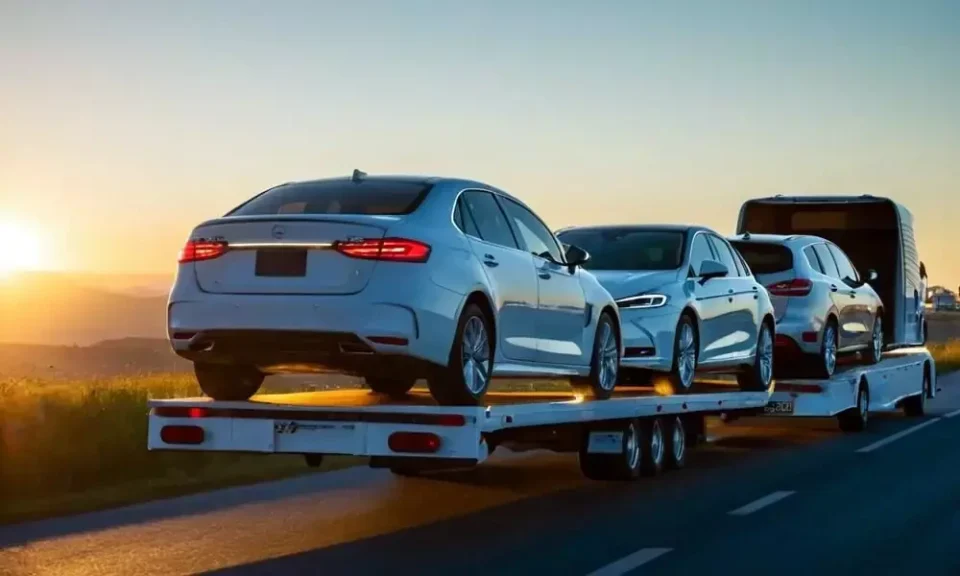
Enclosed transport units and multi-car carriers sit at the speciality end of the tow truck category range. Enclosed carriers protect luxury, vintage, and high-value vehicles from road debris and external exposure during transport over long distances. Multi-car carriers move multiple vehicles simultaneously and are used by dealerships, auction houses, and fleet operators managing large volume vehicle movements across regional and interstate freight routes. Rotator cranes represent the heaviest end of the spectrum and are deployed for overturned commercial vehicles, highway accidents with structural obstructions, and situations where conventional boom angles cannot safely reach the vehicle from the available road position at the scene.
Each tow truck category exists to address a specific recovery condition. Flatbed and wheel lift units cover the majority of standard roadside call-outs. Integrated, speciality, and rotator units handle complex, high-risk, and high-value recovery situations that fall entirely outside the scope of conventional roadside operations.
