
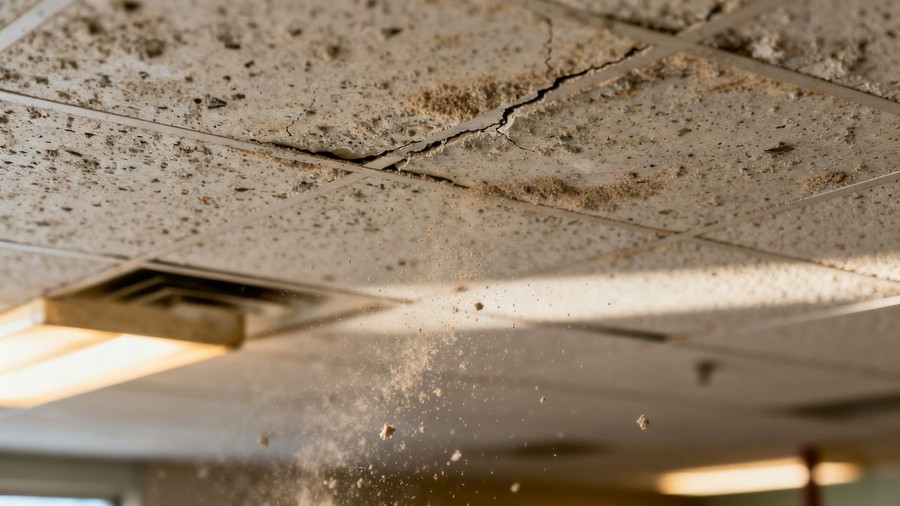
Common Characteristics of Suspect Tiles
Many commercial buildings constructed before the mid-1980s may have ceiling tiles containing asbestos. These tiles often have a fibrous, felt-like backing and can feel lightweight. Visually, they might appear off-white or gray, though color isn’t a definitive indicator. A key characteristic to look for is a dimpled or fissured surface texture. When examining the edges of the tiles, especially where they meet the grid system or at any broken points, you might see a fibrous composition. This is where the mineral fibers are most exposed and can become airborne if disturbed. Older vinyl tiles, often with a felt-like backing, may contain asbestos. These tiles, along with many other products, utilized asbestos fibers.
Visual Clues Indicating Potential Asbestos Content
While visual inspection alone cannot confirm asbestos, certain signs can raise suspicion. Look for tiles that appear brittle or have a chalky texture. Discoloration or spotting, particularly if the tiles seem to have been disturbed, can also be a clue. Sometimes, a rough texture, almost like cottage cheese, might indicate spray-applied materials that could contain asbestos. The presence of dust or fiber fraying around the edges of the tiles or on the metal grid is a significant warning sign. Asbestos ceiling tiles are typically white, grey, or off-white. However, color alone is not sufficient to confirm the presence of asbestos.
The Role of Manufacturer and Product Age
The age of the building and the specific products installed play a significant role in identifying potential asbestos-containing materials. Tiles manufactured before the mid-1980s are more likely to contain asbestos, as regulations restricting its use were not widely enforced until then. Many well-known manufacturers produced asbestos-containing ceiling materials during this period. Checking building records for renovation history or attempting to contact the original manufacturer or building materials supplier can sometimes provide information. If records are unavailable or inconclusive, it is always safest to assume that materials installed before the mid-1980s are suspect and require professional testing before any work is done.
The Hazards of Disturbed Asbestos Ceiling Tiles
Fiber Release During Maintenance Access
When building staff or contractors need to access the space above a drop ceiling for maintenance or repairs, they often lift or remove ceiling tiles. Even careful handling can disturb asbestos-containing materials, causing microscopic fibers to become airborne. These fibers are not visible to the naked eye and can remain suspended in the air for extended periods. Over time, repeated access for routine maintenance can lead to a steady release of these hazardous particles into the work environment. This is particularly common in commercial buildings where access to ductwork, wiring, or plumbing above the ceiling is frequently needed.
Cumulative Exposure from Repeated Disturbances
Commercial buildings, especially older ones, often undergo various maintenance activities over their lifespan. Each instance of lifting or removing an asbestos ceiling tile, no matter how minor, contributes to the overall fiber count in the air. While a single disturbance might release a small amount of asbestos, the cumulative effect of numerous such events can significantly increase the risk of exposure for building occupants and maintenance personnel. This gradual buildup means that even seemingly low-risk activities can pose a serious health threat over the long term. It’s important to remember that asbestos exposure typically happens when materials containing it are disturbed.
Risks Associated with Renovation Activities
Renovation projects present a heightened risk for asbestos fiber release. Activities such as demolition, cutting, drilling, or even extensive cleaning can aggressively disturb asbestos-containing ceiling tiles. Unlike routine maintenance, renovations often involve more forceful actions that can break apart tiles and release a much larger quantity of fibers. Without proper precautions and professional assessment, these activities can turn a dormant hazard into an acute exposure event, potentially contaminating large areas of the building and posing significant health risks to workers and anyone nearby. If you suspect asbestos, it is crucial to be aware of these potential asbestos sources to prevent exposure.
Water Damage: An Elevated Asbestos Risk
Water damage presents a particularly serious concern when dealing with asbestos ceiling tiles. Unlike dry, intact tiles, moisture significantly accelerates the breakdown of the materials that bind asbestos fibers together. This means that even without direct physical disturbance, water-logged tiles can begin to release hazardous fibers into the surrounding air.
How Moisture Accelerates Fiber Release
When asbestos ceiling tiles get wet, the water penetrates the tile material. This moisture dissolves the binders, which are often cementitious or adhesive compounds. As the water evaporates, it leaves behind mineral deposits and weakens the tile’s structure. This repeated cycle of wetting and drying makes the tiles increasingly brittle and prone to disintegration, a process known as becoming friable. A friable material is one that crumbles easily under hand pressure, allowing asbestos fibers to become airborne. This is a critical point: water damage transforms a potentially stable asbestos-containing material into an active hazard.
Diagnostic Signs of Chronic Leaks
Identifying the signs of water damage is key to recognizing an elevated asbestos risk. Look for:
- Concentric Stains: Brown rings appearing on the tiles, often with a darker center. Each ring typically indicates a separate wetting event from a leak above.
- Discoloration and Sagging: Tiles may appear discolored, yellowed, or even develop a warped or sagging appearance as they absorb moisture.
- Mold or Mildew Growth: Damp conditions can encourage the growth of mold and mildew on or within the ceiling tiles.
These visual cues point to a history of leaks, which means the tiles have likely been compromised and are releasing fibers. For commercial buildings, especially those with older plumbing or HVAC systems, these signs are a strong indicator that asbestos testing is needed.
Common Sources of Above-Ceiling Water Intrusion
Water typically finds its way into ceiling spaces from several common sources in commercial buildings:
- HVAC Condensate Lines: These lines carry moisture removed from the air by air conditioning systems. Leaks here are frequent and can cause persistent, slow saturation of tiles.
- Plumbing Systems: Leaks from water supply lines or drain pipes running above the ceiling can saturate tiles over time.
- Roof Leaks: Failures in the roofing membrane or flashing can allow rainwater to penetrate the building envelope and reach the ceiling space.
Understanding these potential sources is vital for building maintenance and safety planning, particularly in older structures where asbestos materials may be present. Addressing water intrusion promptly is not just about preventing structural damage; it’s also about mitigating a significant asbestos exposure risk.
Asbestos Ceiling Tiles and HVAC System Interactions
When commercial buildings have asbestos ceiling tiles, the heating, ventilation, and air conditioning (HVAC) systems can become a significant part of the problem. These systems are designed to circulate air throughout the entire building, and if asbestos fibers become airborne from disturbed ceiling tiles, the HVAC system can spread them far and wide. It’s like a silent distribution network for hazardous particles.
HVAC Systems as a Pathway for Contamination
Think about how an HVAC system works: it draws in air, conditions it, and then pushes it out to different rooms. If asbestos fibers are released into the air, especially in the plenum space above a suspended ceiling, the HVAC system can easily pull these fibers into its intake. Once inside the ductwork, the fibers can settle on surfaces or become trapped in filters. Over time, the continuous airflow can dislodge these settled fibers, re-releasing them into occupied spaces. This means that even a small disturbance in one area can lead to widespread contamination throughout the building, affecting air quality in offices, meeting rooms, and common areas. The interconnected nature of HVAC systems makes them a primary concern for asbestos dispersal.
Identifying Asbestos in Ductwork and Insulation
It’s not just the ceiling tiles themselves that can be a problem. Asbestos was also commonly used in various components of older HVAC systems. This includes:
- Ductwork insulation: Many older ducts were wrapped in asbestos-containing insulation to help regulate temperature and reduce noise. This material can become brittle and release fibers when disturbed.
- Seals and gaskets: High-temperature components within the HVAC system, like boilers or furnaces, often used asbestos gaskets and seals to prevent leaks. These can degrade over time.
- Vibration dampeners: Flexible connections or vibration dampeners used in ductwork might also contain asbestos materials.
Visually identifying asbestos in these areas can be difficult. Materials might look like simple insulation or sealing tape, but their composition could include asbestos. Signs of potential asbestos include a flaky, papery texture around duct joints or insulation that appears fibrous and deteriorated. If you suspect asbestos is present in your HVAC system, it’s best to assume it is until professional testing can confirm otherwise. For more information on identifying suspect materials, resources on common characteristics of suspect tiles can be helpful.
The Importance of HVAC Asbestos Testing
Given the potential for widespread contamination, testing HVAC systems for asbestos is a critical step, especially before any renovation or maintenance work is planned. This testing helps building owners and managers understand the scope of the potential hazard. If asbestos is found in the HVAC system or in the ceiling tiles that interact with it, a plan must be put in place. This plan might involve:
- Encapsulation: Sealing the asbestos-containing material to prevent fiber release.
- Enclosure: Building a barrier around the material.
- Removal (Abatement): Safely removing the asbestos-containing material by licensed professionals.
Ignoring potential asbestos in HVAC systems can lead to serious health risks for building occupants and significant legal liabilities for owners. Professional asbestos testing provides the necessary data to make informed decisions about managing these risks and maintaining a safe indoor environment. Careful cleaning of acoustic ceiling tiles, for instance, uses minimal moisture to avoid damage, a principle that also applies to handling HVAC components to prevent oversaturation.
Regulatory Requirements for Asbestos Management
Mandatory Asbestos Surveys Before Renovation
Before any work that might disturb building materials begins, a thorough asbestos survey is often required. This isn’t just a suggestion; it’s a legal necessity in many places. The goal is to identify any asbestos-containing materials (ACMs) that could become a hazard if disturbed. Failure to conduct these surveys can lead to significant legal trouble and health risks for everyone involved. Think of it as a critical first step before any demolition or major repair work starts. It helps building owners and managers understand what they’re dealing with and plan accordingly. This proactive approach is key to avoiding accidental exposure and subsequent fines. For instance, regulations like those outlined by the EPA detail requirements for renovation and demolition projects in structures containing asbestos.
Legal Implications of Disturbing Suspect Materials
Disturbing asbestos-containing materials without following proper procedures can have serious legal consequences. This includes hefty fines from regulatory bodies like the Occupational Safety and Health Administration (OSHA) and the Environmental Protection Agency (EPA). Beyond financial penalties, there’s the potential for lawsuits from individuals who may have been exposed. Building owners and contractors share responsibility for compliance. Ignoring the presence of asbestos or improperly handling it can lead to severe penalties, including shutdowns and legal action. It’s vital to understand that ignorance is not a defense when it comes to asbestos regulations.
Compliance with State and Federal Regulations
Navigating asbestos regulations requires attention to both federal and state laws. Federal agencies like the EPA and OSHA set baseline standards for asbestos management, including requirements for inspections, notifications, and abatement procedures. However, many states have their own, often more stringent, regulations that must also be followed. Building managers need to be aware of these specific state requirements, which can vary significantly. Key aspects of compliance often include:
- Notification: Informing relevant authorities about planned renovation or demolition work involving suspect materials.
- Documentation: Maintaining records of asbestos surveys, abatement plans, and disposal manifests.
- Training: Ensuring that workers who may encounter asbestos receive proper training.
- Waste Disposal: Adhering to specific protocols for the safe transport and disposal of asbestos waste.
Staying up-to-date with these rules is an ongoing process, as regulations can change. Consulting with environmental professionals can help ensure that all applicable state and federal requirements are met, protecting both people and the building.
Professional Assessment and Abatement Procedures
When dealing with suspected asbestos ceiling tiles, it’s important to remember that this is not a DIY situation. The risks associated with disturbing these materials are significant, making professional involvement a necessity. Engaging certified professionals is the only safe and legal way to handle potential asbestos hazards.
The Necessity of Certified Asbestos Testing
Before any work begins, a thorough assessment is required. This involves collecting samples of the suspect ceiling tiles and sending them to an accredited laboratory for analysis. This testing confirms whether asbestos is present and, if so, what type and concentration. Without this step, you’re operating on assumptions, which can lead to improper handling and increased risk. This initial testing is a key part of any asbestos management plan.
When to Engage Licensed Abatement Contractors
If asbestos is confirmed, or if there’s a strong suspicion and a need for removal or disturbance, it’s time to call in the experts. Licensed asbestos abatement contractors have the training, equipment, and knowledge to manage the process safely and in compliance with regulations. They understand how to:
- Set up containment areas to prevent fiber spread.
- Use specialized equipment like negative air machines and HEPA filters.
- Perform the removal using methods that minimize fiber release, such as glove bags for smaller jobs [7ed4].
- Dispose of the hazardous materials properly.
Commercial asbestos tile removal on Long Island, for example, often follows specific pricing structures and regulatory guidelines [8784].
Safe Handling and Removal Protocols
Licensed contractors follow strict protocols to protect workers, building occupants, and the environment. These protocols include:
- Personal Protective Equipment (PPE): Ensuring all workers wear appropriate respirators and protective clothing.
- Containment: Creating sealed work areas using plastic sheeting and negative air pressure to keep fibers from escaping.
- Wet Methods: Often, materials are kept wet during removal to suppress dust and fiber release.
- Decontamination: Establishing procedures for workers and equipment to leave the containment area without carrying contamination.
- Disposal: Transporting asbestos-containing materials in sealed, labeled bags to approved landfills.
